Escape games for beginners: where to start (and where to go next)
Escape-room games look simple. A locked room, a few clues, a door. Then you are forty minutes in, staring at a drawer, wondering if you are the problem.
You are not. Some games are just a rough place to start. So where should you start if you are new to the genre?
For this list I looked for three things. First, easy or medium difficulty, with puzzles that players call fair and logical rather than guesswork. Second, a short playtime, so you can finish in an evening or two. And third, where our editorials mention one, a decent hint system for when you get stuck. Let's take a look.
The classic first pick: The Room
If you ask around for a first puzzle game, someone will say The Room. And for good reason. A letter leads you to an attic with a carved iron safe, and you open it layer by layer: turning dials, sliding panels and using an eyepiece lens to reveal hidden symbols. Players say it is challenging without being unfair, and the built-in hints help when you get stuck without spoiling the whole solution. Our editorial calls it a good first puzzle game, and I agree.
It is short, two to four hours, and it ends on a cliffhanger. Which is handy, because The Room Two picks up right there. It swaps the single box for a series of themed rooms, from a crypt to a ship's cabin, and many players prefer it to the first. Most describe the difficulty as just right, and the hints are there again.
One small caveat for both: a few puzzles come down to spotting which tiny detail can be clicked. Annoying, sure. But not a deal-breaker at these prices.
Low-stress rooms for a relaxed evening
Not everyone wants a moody gothic puzzle box. Sometimes you just want a tidy, friendly escape room. Enter these three.
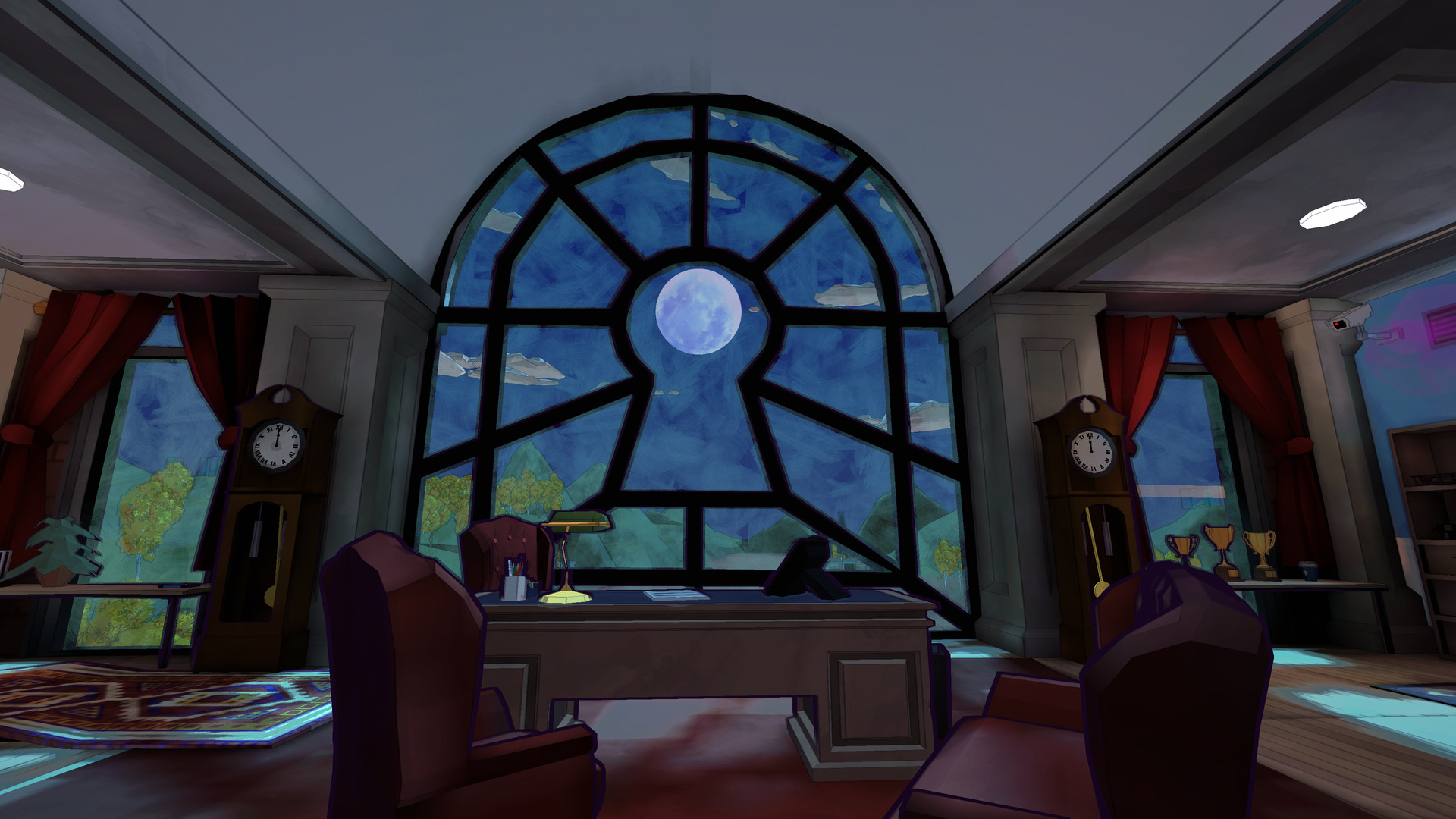
Escape From Mystwood Mansion is about as beginner-friendly as it gets. You are a delivery driver locked in a mansion by an unseen puzzle-maker, and you work through five rooms. Players describe logical, observation-based puzzles with no moon logic, plus an optional hint system at every step. There are even hidden shortcuts that let you skip some puzzles. The one thing to know: it only saves when you finish a room, so don't quit halfway.
Regular Factory: Escape Room puts you on an assembly line that turns out to be making something rather less regular. The puzzles are clear and fairly simple, with codes and hidden objects, and it has full controller support for couch play. Experienced solvers find it too easy, which is exactly why it is here.
The Escaper is a cheap set of four themed rooms. You can play each one against a timer, like a real escape room, or switch the clock off and take your time. Nice touch, that. It is done in an hour or two, so it works well as a quick taster.

Try it for free first
Not sure the genre is for you yet? Fair enough. These cost you nothing but an evening.
Samsara Room is a free single-room game from Rusty Lake: a telephone, a mirror, a grandfather clock and a very strange way out. Players often recommend it as the entry point to the Rusty Lake games. The first stage is the steepest, and the puzzles get easier once you grasp the game's logic. Keep a notebook nearby, one player suggests.
Cube Escape: Paradox is a step up in size. The first chapter is free, and it comes with a live-action short film that hides clues for the game. Clever, right? The puzzles are well structured but occasionally tough, and a few players reached for a guide once or twice. That is fine. Nobody is grading you.
And if you have a friend handy, We Were Here is free too. You are split up in a frozen castle and can only talk by walkie-talkie, each seeing clues the other needs. Players love how it forces real cooperation. The final puzzle is widely seen as vague and frustrating though, so go in knowing that.

Rather play detective?
Okay, these are not escape rooms in the strict sense. But if locked doors feel a bit abstract, a mystery can be a gentler way into the same kind of thinking: look closely, connect clues, find the answer.
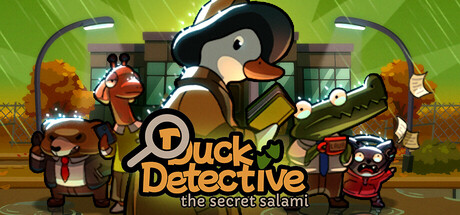
Duck Detective: The Secret Salami is a short, silly case about a sausage conspiracy (yes, really). You collect keywords and slot them into fill-in-the-blank deductions. Players call the deductions neither too easy nor too hard, and the voice acting gets a lot of love. It is over in two to three hours, which some felt was thin for the full price.
Tangle Tower is a point-and-click murder mystery in a very odd mansion, with a fully voiced cast and two charming detectives. Reviewers call the puzzles intuitive and fair, with hints that do not give too much away and no failure states. You cannot really lose. The ending felt rushed to many players, and it is closer to a visual novel than an escape game, but as a first step it is lovely.

Better together: beginner-friendly co-op
Of course, escape rooms are traditionally a group thing. And two heads really are better than one when you are stuck.
Escape Academy is a collection of over a dozen rooms, designed by people who build real-life escape rooms. You can play solo or with one friend, locally or online. Players say it captures the feel of a physical escape room well, and opinions on difficulty vary: some found it too easy, others needed hints, but most felt the solutions made sense afterwards. Keep pen and paper handy. Co-op is limited to two players, and some players report desyncs.
The Past Within is a short co-op-only game from Rusty Lake. One player is in the past, the other in the future, and you describe to each other what you see. Most reviewers found it challenging enough without getting stuck. It is cross-platform, so a friend can join from a phone, but both of you need a copy.
The next step up
Alright, so you have finished a few and you want more. Maybe a bit more challenge, a bit more length. Here is where I would go next.
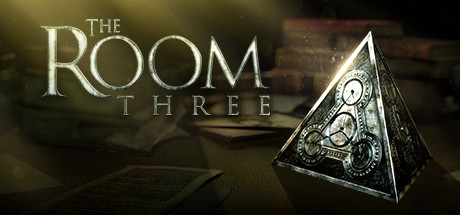
The Room Three is the obvious follow-up if you liked the first two. It is the most ambitious and longest game in the series, six to ten hours, with an island mansion that links the rooms together and four endings. The flip side: more backtracking and more tiny buttons to miss. Play the first two before this one.
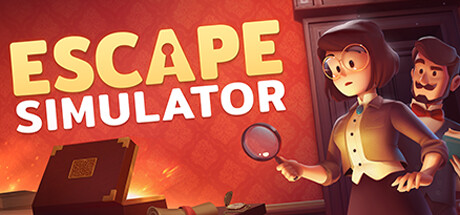
Escape Simulator is where a lot of people end up, and it is easy to see why. Twenty-eight base rooms you can play solo or in online co-op, nearly everything can be picked up or smashed, and the Steam Workshop adds thousands of community rooms. It is medium difficulty, and those community rooms range from great to maddening, so it is a natural place to test yourself.
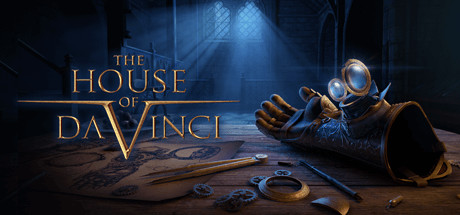
The House of Da Vinci is The Room's style with Renaissance machines, and some players find it a little harder. Fair warning: players say the hints often say little more than "look around", and the controls can be fiddly. Think of it as the test of whether you still need hand-holding ;)
Conclusion
Starting out does not have to be frustrating. If you want one safe pick, go for The Room. If you want something even gentler, Escape From Mystwood Mansion holds your hand at every step. And if you would rather not spend anything yet, Samsara Room is free.
Once those feel easy, Escape Simulator and The Room Three are waiting. Pick one and get stuck in. Just not too stuck.