The Room games in order, and puzzle-box games to play next
There's something about a box that won't open. A dial that clicks into place, a panel that slides away, a hidden drawer you completely missed. It's simple, really. And yet it's one of the most satisfying feelings in gaming.
Nobody does this better than The Room. Fireproof's series started on mobile and made the jump to PC, and it basically defined the "puzzle-box game". But there are five of them now, so where do you start? And what do you play once you've opened every last drawer?
Alright, let's sort that out.
What makes a puzzle-box game?
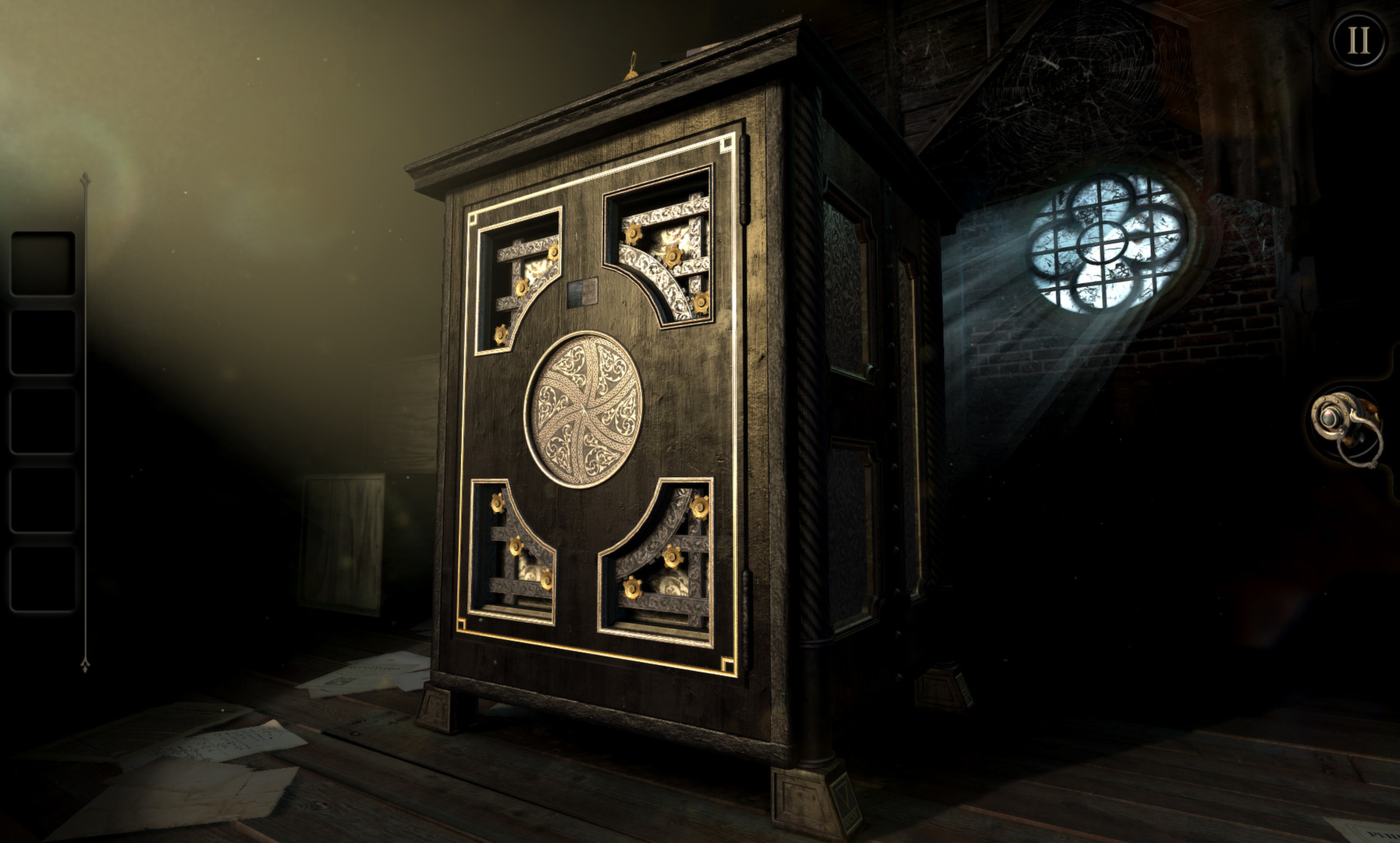
A puzzle-box game isn't quite an escape room. You're not hunting through a room for a key under the rug. Instead, the puzzle is the object in front of you. You zoom in, turn it around, poke at it and slowly uncover layer after layer.
The best ones share a few things:
- Tactile mechanisms: dials, levers, switches and gears that feel physical, even with a mouse.
- A special lens or tool that reveals what's hidden, like The Room's eyepiece.
- A light story in the background, usually with a mysterious letter-writer and something slightly occult going on.
Of course, they also share a weakness: every so often the solution comes down to spotting one tiny clickable detail. You'll see that complaint come back a few times below. It's part of the genre, I'm afraid.
The Room games in order
Good news: the order is easy. Just follow the numbers.
- The Room: one carved iron safe in an attic, opened layer by layer. Players finish it in two to four hours. It's short and ends on a cliffhanger, but that's what the sequel is for.
- The Room Two: instead of one box you follow letters from a scientist known as AS through a series of themed rooms, from a crypt to a ship's cabin. Many players prefer it to the first game, thanks to more varied locations and more inventive mechanisms. Three to four hours.
- The Room Three: the biggest and most ambitious one. An island mansion links the rooms together, there are four endings and optional bonus puzzles, and players report six to ten hours. The catch? Lots of backtracking, which tires some players out.
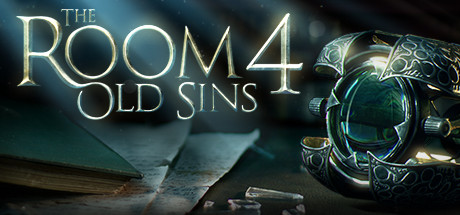
- The Room 4: Old Sins: a dollhouse in an attic, with every miniature room its own puzzle box. About 99 percent of its reviews are positive, and many call it the best in the series. Four to seven hours.
Why stick to the order? The story threads through the games, and The Room Three in particular works best after the first two. That said, Old Sins works as a starting point too, if you'd rather jump straight to the one players rate highest. Otherwise, start at one, I'd say. They're all cheap, and buying the series bundle on sale is the best value.
Got a VR headset? Play this one too
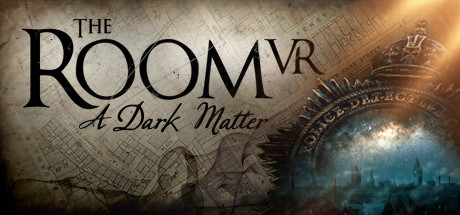
Then there's the fifth game, which fits outside the numbering. The Room VR: A Dark Matter takes you to London in 1908, where a missing Egyptologist leads you through an archaeology institute and stranger places beyond.
And here's the thing: puzzle boxes make a lot of sense in VR. Instead of clicking a dial, you just… turn it. Players say the series' contraptions translate naturally to motion controllers, with some new interactions that only work in VR. It's one of the best-reviewed VR puzzle games on Steam.
The common complaint is length: three to five hours, which feels short at full price. Many players suggest waiting for a sale. Newcomers can start here, though series fans will catch more of the references. You do need a headset, obviously.
Finished The Room? Enter The House of Da Vinci
This is the obvious next step, and for good reason. Blue Brain Games' trilogy is built in the style of The Room, but swaps the Victorian occult for Renaissance Italy. You play Leonardo da Vinci's apprentice, opening lockboxes and contraptions based on his inventions.
The House of Da Vinci gives you a gauntlet that reveals hidden mechanisms and glimpses of the past. Players praise the detailed machines and some find it a little harder than The Room. It's also longer, at six to ten hours. The downsides? Fiddly hitboxes, slow point-to-point movement, and hints that often say little more than "look around". Critics also say the story and atmosphere don't quite match Fireproof's.
The House of Da Vinci 2 adds a clever twist: the Oculus Perpetua lets you look into the past and change things in the present. Fans say it matches the first game. Watch out for difficulty spikes, though; one player found some puzzles near impossible without a walkthrough.
The House of Da Vinci 3 closes the trilogy with more time-shifting puzzles and room-sized contraptions. The controls can feel a bit wonky, players say. Since it's the finale of an ongoing story, play these in order too.



Still hungry? The House of Tesla
Same studio, different genius. The House of Tesla: Definitive Edition sends you through Nikola Tesla's abandoned Wardenclyffe facility, his New York lab and the Chicago World's Fair, solving mechanical puzzles to power up his inventions. Clever, right?
Fans praise the gorgeous locations, the music and a hint system that guides without spoiling. Several returning players found it a little easier than Da Vinci. It's less loved overall, though: one player disliked the fixed movement and found a late occult turn tacked on, and another hit a game-breaking hang. At full price it's a sizeable purchase. If you enjoyed the Da Vinci games, go for it; otherwise, maybe wait for a sale.

Smaller boxes for a single evening
Not ready for another ten-hour trilogy? These three are smaller and cheaper, and each puts its own spin on the formula.
Machinika Museum is The Room with an alien twist. You're a researcher at a far-future museum figuring out strange extra-terrestrial machines. Players enjoy prodding each device until it reveals another layer, and call it easy to medium. The controls are a bit clunky, and the story is thin and leads straight into a sequel. Three to four hours.
Access Denied: Escape locks you in a lab with 30 safes to crack. The puzzles lean on numbers and logic rather than flashy mechanisms, so it's less tactile than The Room. But it's very cheap and done in two to three hours.
And then Mystery Box - Hidden Secrets, which is the genre boiled down to its essence: a box floating in darkness, covered in handles, wheels and hidden compartments. No rooms, no story. The one written review calls it both very enjoyable and very frustrating (hah). It has very few reviews, so treat this as a cautious tip for people who want something smaller and tougher.



Conclusion
In the end, it's simple. Play The Room games in order, one to four, and add the VR one if you have a headset. Want a single game instead? Old Sins is the one players rate highest.
Once you've opened every box Fireproof made, move on to The House of Da Vinci trilogy, then The House of Tesla. And if you just want one more evening of turning dials, Machinika Museum is a lovely little detour.
Which box are you opening first? :)