
Escape-room visual novels: story games with real locked rooms inside
Most escape games treat the story like wallpaper. Someone locked you in, there's a note on the desk, now find the four-digit code. Fine. But you don't really care who locked you in, do you?
Escape-room visual novels flip that around. The story comes first: long scenes, a cast of strangers, a mystery that gets darker every hour. And then, right when you're hooked… the door slams shut and you're solving a locked room with your life on the line. The puzzle and the plot are the same thing.
It's a small niche, and it's not for everyone. There's a lot of reading. So which ones are worth the hours? Let's take a look.
Zero Escape: where it all starts
If this genre has a home, it's Zero Escape: The Nonary Games. Nine kidnapped strangers are forced into a deadly game by someone called Zero, and you alternate between long story scenes and locked rooms full of puzzles. Escape, read, argue with the other captives about who to trust, repeat.
The bundle gives you two full games. 999 (Nine Hours, Nine Persons, Nine Doors) is remastered from the Nintendo DS with voice acting, and its sequel Virtue's Last Reward is included too. Players call the puzzles hard but fair, with ciphers and maths, and say the second game is the tougher one. The clever bit: the branching routes and multiple endings aren't just replay value, they're part of the mystery itself. I won't say more than that, and neither should anyone else. Players stress going in completely blind, to the point of avoiding the community pages.
Of course, it has its flaws. 999 shows its age in quality of life, and Virtue's Last Reward has a lot of unskippable animations you'll see again and again (and again). Expect very long reading sessions between puzzles and some violence. It's also a big commitment at 40+ hours for both games. But if you like escape rooms and you like a twisty story, this is the easiest recommendation on this list.

AI: The Somnium Files: same writer, different kind of lock
Finished Zero Escape and want more from the same mind? Enter AI: The Somnium Files, from Kotaro Uchikoshi, the writer behind the Zero Escape series.
This time there's no kidnapping game. You're detective Kaname Date in near-future Tokyo, investigating a murder where the victim's left eye was gouged out. Pleasant, right? You split your time between crime-scene investigation and Somnium sections, where Date dives into witnesses' dreams under a six-minute limit. Those dreams are the closest thing to an escape room here: a strange space, a ticking clock, and a puzzle logic you have to crack before time runs out.
Players mostly praise the cast and voice acting, with Date and his partner Aiba as a favourite double act, and a mystery that pays off across several routes. The tone is the big question mark. It swings hard between grim murders and goofy, often crude humour, which some find endearing and others find grating. The dream puzzles split opinion too: some love the surreal logic, others call it trial and error. The gameplay is lighter than Zero Escape overall, and several players suggest the Japanese audio over the English dub. Plan on 25 to 30 hours to see every route.

Locked in with strangers: escape rooms with real stakes
Not every game here is a visual novel in the strict sense. These two are first-person escape games, but they borrow the thing that makes Zero Escape work: the people trapped with you matter, and your puzzle-solving decides what happens to them.
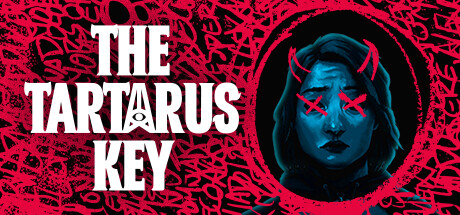
The Tartarus Key is the closest to the Nonary Game in spirit. Alex Young wakes up in a locked mansion watched by cameras, and every door is sealed by a trap or puzzle. Along the way she finds other captives, and failing certain puzzles can get them killed, which shapes which of three endings you see. Sound familiar? The PS1-era horror look is spooky, but there's no combat, no chases and no jump scares. Players praise the themed puzzles; one says it was the first game in years that made them reach for pen and paper. The good and true endings feel rushed, though, and at five to seven hours the full price is steep. On sale, it's an easy pick.
Homebody takes a group of old college friends to a remote rental house, kills the power and sends a killer after them. Every time Emily dies, she loops back to the foyer with what she's learned. Players single out the character writing about strained friendships as much as the non-linear, Myst-style puzzles, and the Memory Log keeps codes and shortcuts between loops. Fair warning: you'll be hiding in closets from the killer while you think, and the puzzles can lean towards obscure logic. If that sounds stressful, our horror escape games list tells you exactly how scary it gets.

One evening, one story
Forty hours is a lot to ask. If you want the visual novel feeling in a single sitting, these two are much shorter.
Detective Instinct: Farewell, My Beloved is a detective visual novel in the style of classic Japanese adventure games. A woman disappears on a cross-country train, and nobody on board remembers she ever existed. Except you. You investigate by picking commands from a menu and questioning passengers, chapter by chapter. Players love the cast, the pixel-art portraits and especially the soundtrack. Honestly though, the deductions are simple and some twists are easy to see coming, so mystery veterans may find it slow. It's around five hours, and it plays more like a novel than a puzzle game. Which is sort of the point here.
Escape Tales: The Awakening is a darker kind of short story. Sam, a widower, turns to a book of rituals to wake his comatose daughter. You start in his basement and move through eight locations you can explore in any order, with more than 20 puzzles and choices that steer you towards one of several endings. Players tag it as story rich and visual novel, and the one written review describes it as text-heavy, close to an old text adventure. It's only two to three hours, and there are very few reviews so far, so treat it as a moody evening rather than a sure thing.


For the long haul: big casebook stories
Liked the length of Zero Escape more than the locked rooms? These two are long, story-heavy mysteries where the puzzles are about testimony and evidence rather than safes.
Murders on the Yangtze River is openly modelled on Ace Attorney, but set in early 20th-century China. You play John Shen, a travelling detective chasing the truth behind his brother's death across five cases that tie into one larger plot. You search crime scenes, question suspects and point out contradictions in testimony, with mini-games mixed in so each case feels different. Players rate it overwhelmingly positive and praise the ink-wash art, the voice acting and the historical detail. The odd bit: the game starts in Chinese, so you'll have to dig through the settings to switch to English, and the translation has grammar slips. Expect 15 to 20 hours.
Staffer Retro is the biggest read of the lot. You play Verita, a teenage girl at a second-hand shop on an island town, digging into past incidents involving supernatural powers. You combine clues from over 40 kinds of documents across six acts, with eleven endings and full Japanese voice acting. The few players who wrote reviews agree on the writing and the animated art, and single out Act 3 as the high point. The final act and epilogue feel rushed, though, and it's a 20 to 30 hour commitment.
Want something in between? Ghost Trick: Phantom Detective is a lovely story-first puzzle game we covered in our cosy puzzle games list. And if you'd rather do all the thinking yourself, our detective and deduction games guide is the better place to go.


Conclusion
In the end, an escape-room visual novel lives or dies on one thing: do you care about the people behind the locked door? When it works, every puzzle you solve pushes the story forward, and every story beat makes the next puzzle feel urgent.
Want the real thing? Start with Zero Escape: The Nonary Games, then move on to AI: The Somnium Files. Prefer to hold the puzzles in your own hands? The Tartarus Key. Only got an evening? Detective Instinct. Either way, clear your schedule. Nine hours, nine persons, nine doors… and a lot more hours than nine ;)