The best sci-fi puzzle games: test chambers, time loops and rogue AI
A locked room is a puzzle. A locked room on a space station, run by an AI that may or may not want you dead? Now we're talking.
Sci-fi and puzzles go together really well. A laboratory is basically an escape room with a budget. A time loop is a puzzle you replay until you get it right. And a robot narrator is the perfect excuse for a game to test you, chamber after chamber. But "sci-fi" covers a lot of ground, from physics puzzlers to murder cases on a generation ship. So which ones are actually worth your time?
Let's take a look. I've grouped them by the kind of sci-fi they go for, so you can pick your flavour.
Test chambers with an AI watching
This is the classic setup. You wake up in a facility, a voice tells you to solve a room, and then another room, and then another one. Why? Science, obviously.
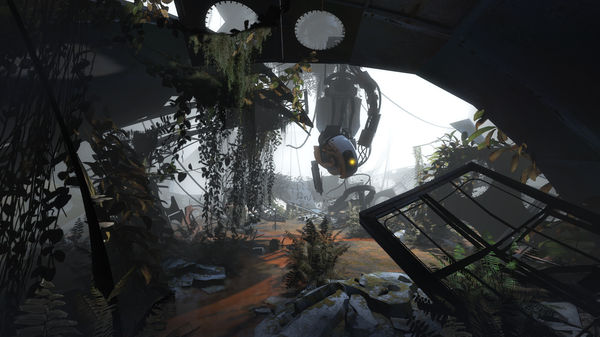
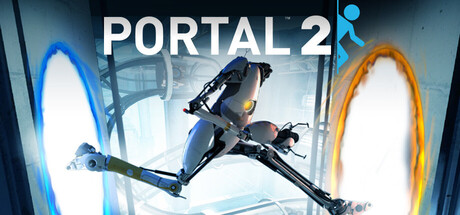
Portal 2 is the one everybody compares everything else to, and for good reason. You place two linked portals and use them to move yourself, cubes, lasers and light bridges through the decaying Aperture Science lab, while GLaDOS and Wheatley keep up the commentary. Players praise the dark humour, the voice acting and the way each chamber teaches you a new idea before testing it. There's also a separate two-player co-op campaign, which is a highlight of its own (mostly for laughing at your partner's mistakes). The only real caveat: these are physics puzzles, not escape-room clue hunting. Ten to fifteen hours, low price. If you haven't played it… you know what to do.
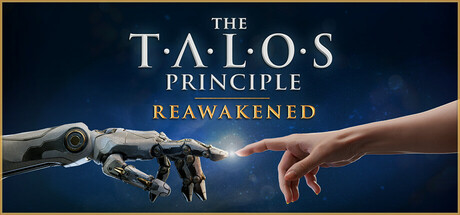
The Talos Principle: Reawakened takes the idea somewhere more thoughtful. It's Croteam's remake of its 2014 classic, bundling the base game, the Road to Gehenna expansion and a new prologue chapter. You solve self-contained logic puzzles across simulated worlds while terminals raise questions about AI, consciousness and free will. Players call the logic fair and the optional star puzzles fiendish, and welcome the new rewind button. The big caveat is performance: many report crashes and blurry upscaling on mid-range PCs, so check before you buy. Finished it? The Talos Principle 2 is the bigger, harder sequel.
The Turing Test is the smaller cousin. You're engineer Ava Turing on a station on Jupiter's moon Europa, solving tests the station AI says only a human can solve, with a tool that moves power between sockets and machines. Players like how steadily it adds new mechanics. The puzzles lean easy for long stretches though, and five to seven hours at full price feels steep to many. Buy it on sale.

Time loops and rewinds
Time travel is a puzzle designer's dream. Mess up? Go back. Learn something? Go back and use it. Here are three very different takes.
Outer Wilds is the big one. Every 22 minutes the sun goes supernova and you wake up again at the start. In between you fly a fragile wooden spaceship between hand-built planets, read the ruins of a vanished alien race and work out why the loop exists. The clever bit: there are no upgrades. Your only progress is what you know. Nearly every player urges you to go in blind, and many wish they could play it for the first time again. Fair warning though, it gives you almost no direction early on, and the space flight takes some patience. Give it a few hours to hook you. It will.
Zero Time Dilemma turns the timeline itself into the puzzle. Nine people wake in an underground facility and are forced into the Decision Game. You play story fragments for three teams in any order, solve escape rooms and make life-or-death choices that branch the timeline. Series fans say it wraps up the trilogy with some of the best storytelling in games. Many also call it the weakest of the three, with repeated puzzle types. And it makes little sense without the first two, so start with The Nonary Games. Prefer rewinding cubes to rewinding timelines? The Entropy Centre has a time-rewind gun on a crumbling space station.
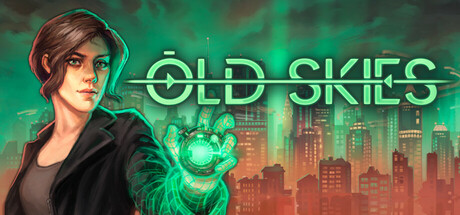
Old Skies is the story pick. You're Fia Quinn, a time agent escorting paying clients on seven trips into New York's past. Players rave about the writing and the voice cast, and several say it made them cry. The puzzles, to be honest, are the weak spot: mostly dialogue-based and fairly easy. Come for the stories, not the brain teasers.


Robots and strange machines, no words needed
Not all sci-fi is chrome corridors and talking computers. Some of the best sci-fi puzzle games don't use a single line of text.
COCOON comes from Jeppe Carlsen, lead gameplay designer of LIMBO and INSIDE. You play a small insect-like creature carrying glowing orbs, and each orb contains a whole world. You jump in and out of them, and even carry one world inside another. Sounds confusing? It isn't, and that's the magic. Players compare the feeling to playing Portal for the first time and say it makes them feel clever without being punishing. A minority found it too guided and linear, and it's short for its price at around five to seven hours. Still one of the best puzzle designs of recent years.
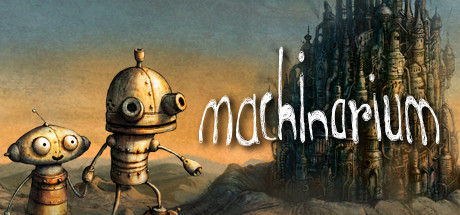
Machinarium is Amanita Design's hand-drawn classic. Josef, a small robot, is dumped in a scrapyard and has to sneak back into a rusty steampunk city to rescue his girlfriend. Characters talk in animated thought bubbles, and you solve inventory puzzles plus standalone logic games. Many players grew up with it and say it still holds up. Some of those logic mini-games are a sticking point though (one player kept losing at five-in-a-row, and I don't blame them). A great entry point, and lovely for families too.

Sci-fi detectives
Prefer cracking a case over cracking a laser puzzle? Sci-fi makes for great crime scenes. These three put you in charge of an investigation where the future itself is part of the mystery. For more cases, see our guide to detective and deduction games.
Whispers of a Machine is a Nordic noir point-and-click from the studio behind Kathy Rain. You're Vera, a cybernetically augmented agent investigating murders in a small town where AI has been banned. Her augments let you scan, sense emotions and analyse evidence, and many puzzles have more than one solution depending on which you use. Critics found the town small and the ending lacking a real climax, but it's often heavily discounted, which makes it an easy buy.
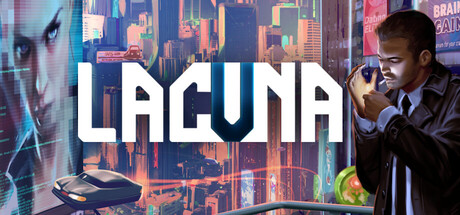
Lacuna is a dialogue-driven detective game in a pixel-art solar system on the edge of war. You search scenes, question witnesses and then fill in an evidence sheet. And here's the twist… there are no takebacks. Wrong answers stick and steer you toward one of several endings. Players praise the art, the soundtrack and the writing. The mysteries aren't very hard though, and it's mostly reading.
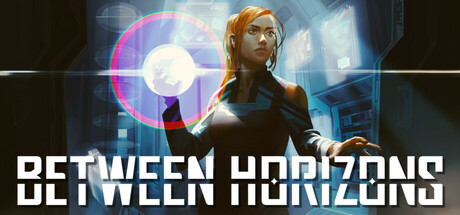
Between Horizons is by the same team. You're Stella, security chief of a generation ship bound for another star, uncovering a conspiracy on board. Same idea: wrong conclusions have lasting consequences. Players like how the ship opens up as the story moves on. The downside is legwork, with no way to find where a person is and clumsy fast travel. If you liked Lacuna, play this next.

Actual escape rooms, in space
Alright, some of you came here for locked doors and hidden codes, not philosophy. Fair enough. These two are escape rooms in the purest sense, just a long way from Earth.
Palindrome Syndrome: Escape Room puts you on a spaceship with no memory of how you got there. You move through its rooms solving logic puzzles, cracking codes and finding hidden objects while your past comes back in pieces. Players say the story surprises more than expected, and the puzzles range from easy to clever. Expect searching as much as reasoning, though, and it's brief at one to two hours. For a very low price, that's a relaxed sci-fi evening sorted. Playing as a pair? Together: Moon Escape is a two-player escape from the Moon, and our asymmetric co-op guide has more like it.
Spacescape is a free VR-only escape game. You're stranded on a zero-gravity space station and work through several rooms of logic puzzles and hidden clues to get home. It's a modest production with little story, and written feedback is thin, but it costs nothing and supports room-scale, teleport and smooth movement. Got a headset? Easy download. More in our VR escape rooms guide.
Want something darker? [SUBJECT] is a one-hour horror trip through a dystopian robot facility. The atmosphere is strong, but the puzzles mostly mean clicking highlighted objects, so it's more mood than challenge.


Conclusion
In the end, sci-fi gives puzzle games the perfect excuse. Why are you solving rooms? Because the AI said so. Why can you try again? Because time broke. Why is there a laser in the way? Because… science :)
Never played one? Start with Portal 2. Want a mystery you'll think about for weeks? Outer Wilds, and go in blind. Short on time? COCOON fits in a weekend. Prefer a case to crack? Lacuna. And if you want a story-heavy escape room with a timeline that branches, our escape room visual novels guide picks up where this one ends. Which one are you booting up first?